
01
The Short Answer
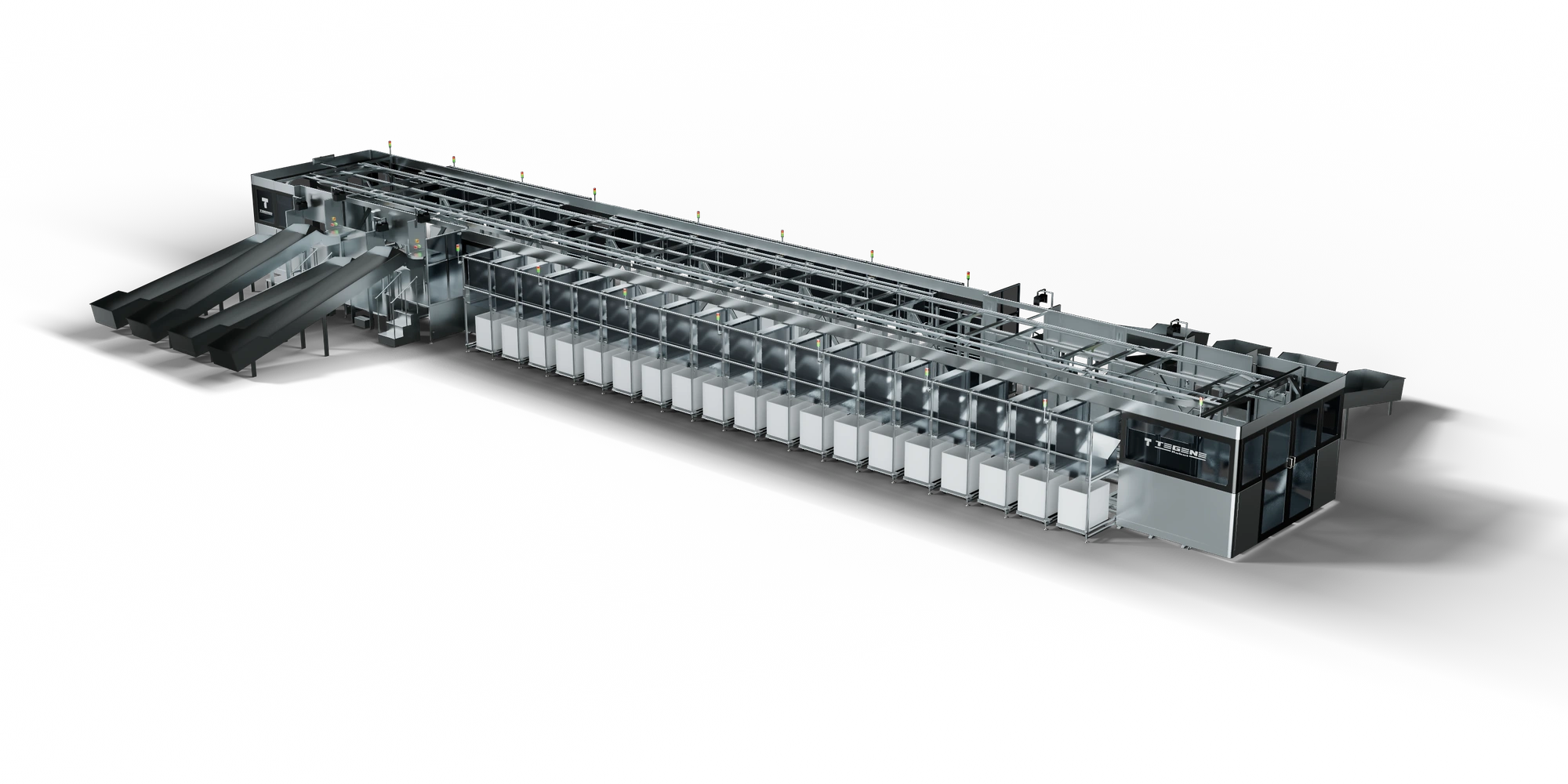
Consider 3D Sorter for small and medium items across multiple orders and destinations; 3D Sorter M for continuous high-throughput sorting and roll-cage collection; 3D Sorter E for complex express/postal items and NC re-sorting; and 3D Sorter X when an existing standard 3D Sorter needs more chutes, subject to its configuration and site conditions.
02
Comparing 5 Mainstream Methods
By working principle, parcel fit, throughput and investment, the mainstream methods fall into five types:
- Cross-belt: very high throughput, high investment and footprint; fits large express trunk hubs.
- Slide/tilt-tray: mature, suited to regular boxes; limited flexibility and chute density.
- Wheel diverter: used for merge/divert on conveyors; limited accuracy and chute count.
- AMR goods-to-person: flexible for picking, but sortation throughput and unit cost are less competitive.
- 3D Sorter Series: configurations for small-to-medium multi-destination sorting, high-throughput multi-layer sorting, complex express/postal items and chute expansion, based on business and site requirements.
03
Decide Across 4 Dimensions
Do not judge by a single spec. Evaluate these four, then match equipment:
- Parcel type: small/medium, non-conveyable or envelope — decides equipment type (e.g. NC all-in-one for non-conveyables).
- Throughput: average and peak volume — helps decide between 3D Sorter and 3D Sorter M.
- Destinations: number of chutes/destinations — decides chute config and expansion module.
- Budget and payback: model ROI with your labor structure, not just unit price.
04
How Tegene 3D Sorter Series Fits
Use the four decision dimensions above to narrow the shortlist, then validate item samples, peak waves, collection methods and interfaces in a site-specific configuration review. Product specifications are a starting point, not a substitute for workflow validation.